/

Shopify sells online. Norkut operates your physical retail.
Shopify is the leader in e-commerce. But multi-store physical retail — inventory between locations, stockouts, margins, network coordination — is another game. That is where Norkut lives.
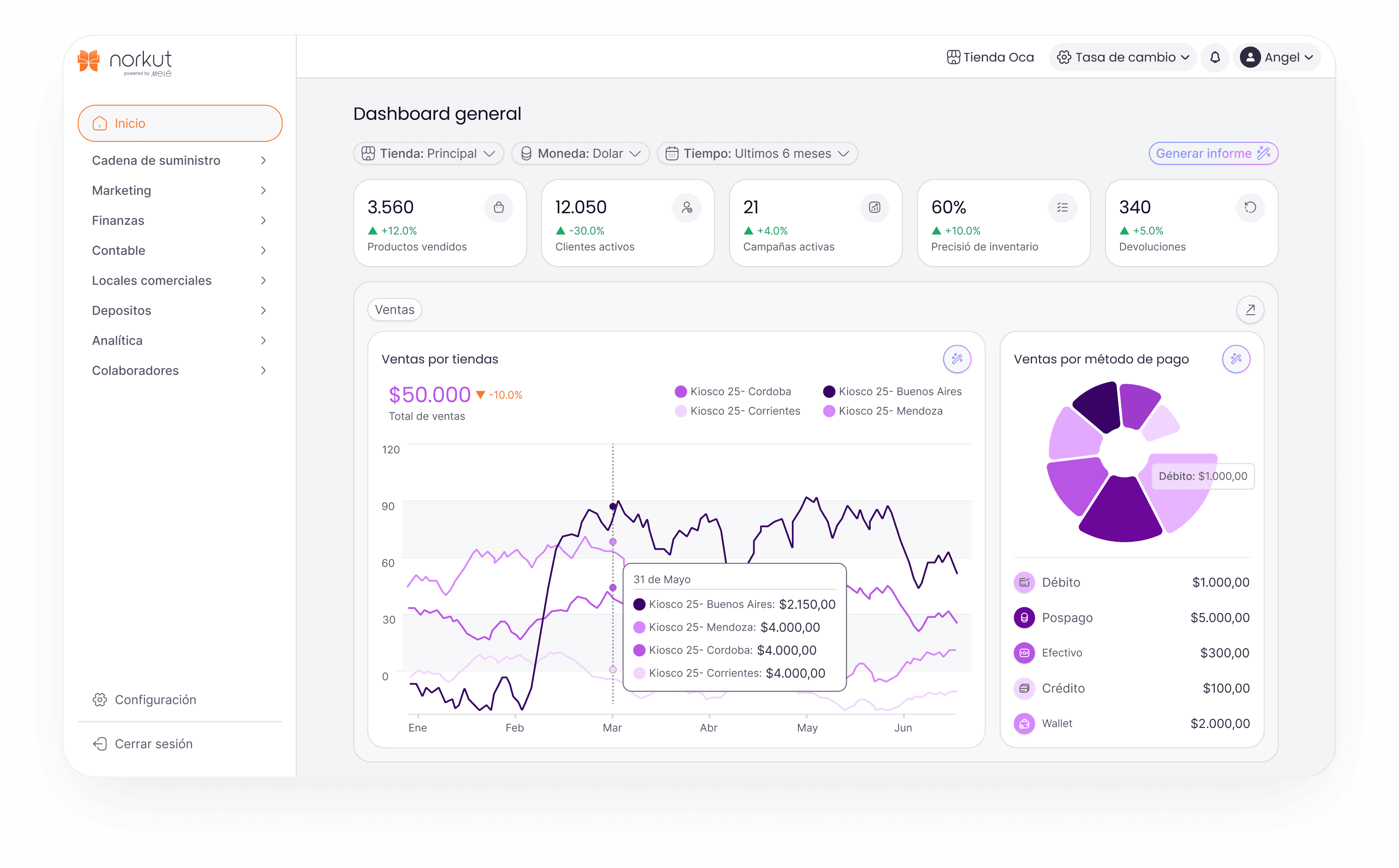
Shopify is excellent for selling online, and its POS works well for simple stores. But it was designed from e-commerce outward, not from multi-store physical operations inward. When a chain needs to coordinate inventory across 50 locations, anticipate stockouts, view margins in real time, and operate with unstable connectivity, Shopify falls short. Norkut was born exactly out of that world.
Norkut vs Shopify: compare multi-store networks, physical operations, and B2B networks
Norkut | Shopify | |
|---|---|---|
Origin |
| E-commerce |
Strength |
| Online store |
Inter-store inventory |
| Limited in complex physical setups |
Operational intelligence |
| E-commerce analytics |
Unstable connectivity | Keeps working even if connection fails | Requires stable connection |
B2B network with suppliers |
| No |
Designed for |
| Brands with an online focus |
Why choose Norkut over Shopify for multi-store physical retail?
Operates with unstable connectivity
Shopify needs a stable connection to operate. Norkut keeps working even if the internet fails, and syncs when the signal returns.
Designed for the physical store, not for the online cart
Shopify was born from e-commerce and operates best from the shopping cart outward. Norkut was born from physical retail operations: stock between stores, stockouts, margins, and real-time network coordination.